 MAKE ロックカンパニー

The laptop was left in the school dormitory, and student A found it stolen after class.
When taking the high-speed train, Ms. Xiaoliang left his seat and went to the bathroom, but his laptop disappeared.
Mr. Xiao Wan, who had just started working, found that his laptop was lost on the workstation when he went to work the next day.
How to keep a laptop safe from being lost when it is stolen?

It is unrealistic to constantly monitor and purchase property insurance, so it is necessary to choose a high security anti-theft lock.
Generally, laptops are equipped with security lock holes located on both sides of the laptop’s opening and closing accessories.
The user fixes the other end of the lock on a table or other fixed object, and inserts the laptop lock into the lock hole to lock it.
So laptops cannot be easily moved or taken away, preventing them from being stolen in any place.
How to use laptop lock? Below, MK815 will provide you with a detailed introduction.
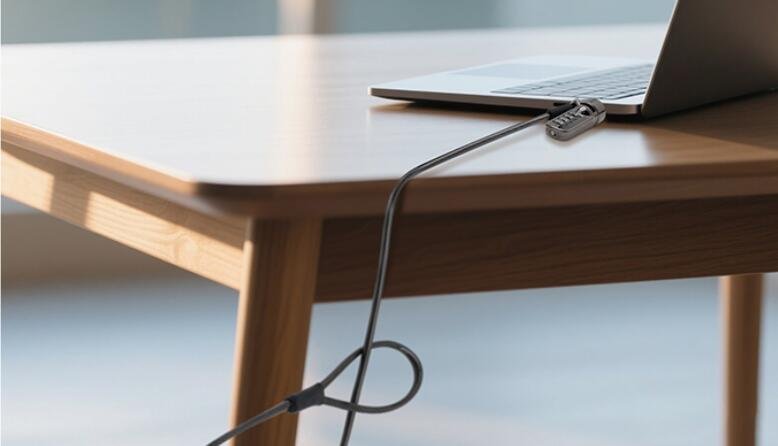
First, determine if your computer slot matches the lock’s keyhole.
The MK815’s lock slot is compatible with laptops with 3*7mm slots.
Secondly, reset password.
While unlocked, turn the dials to the current combination (default code is 0-0-0-0). Use a pointed tool to press the button under the dials. Hold the button down while setting a new code combination. Upon release of button, your new code is now set. Slide the lock knob to unlock and ensure that the new combination works.
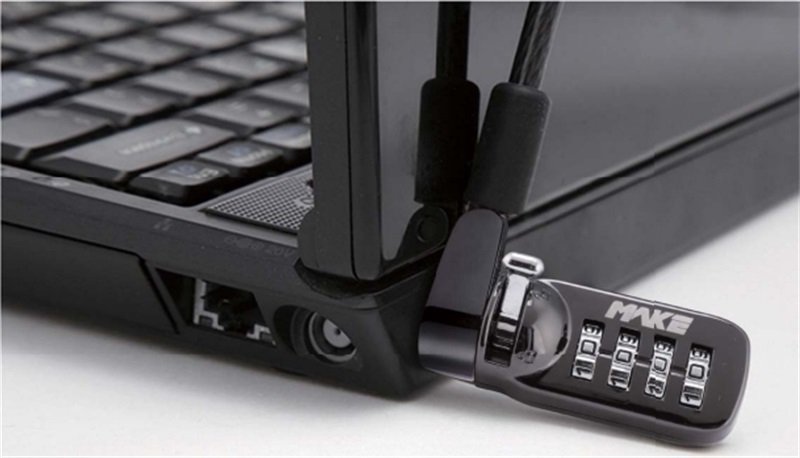
Finally, lock the laptop.
Wrap the cable around the fixture and pass it through the eight character sleeve. Push the lock knob to the open position, then secure it in the safety lock hole of the laptop, and finally push the lock knob to the locked position.
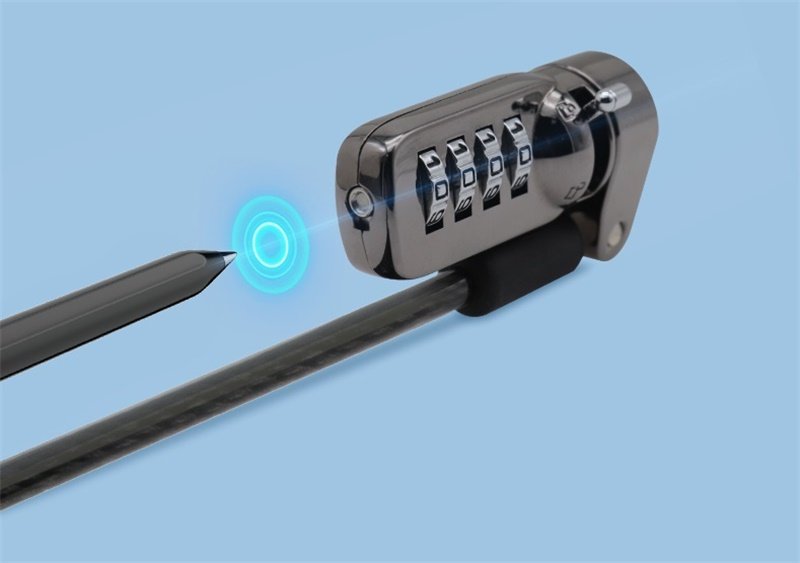
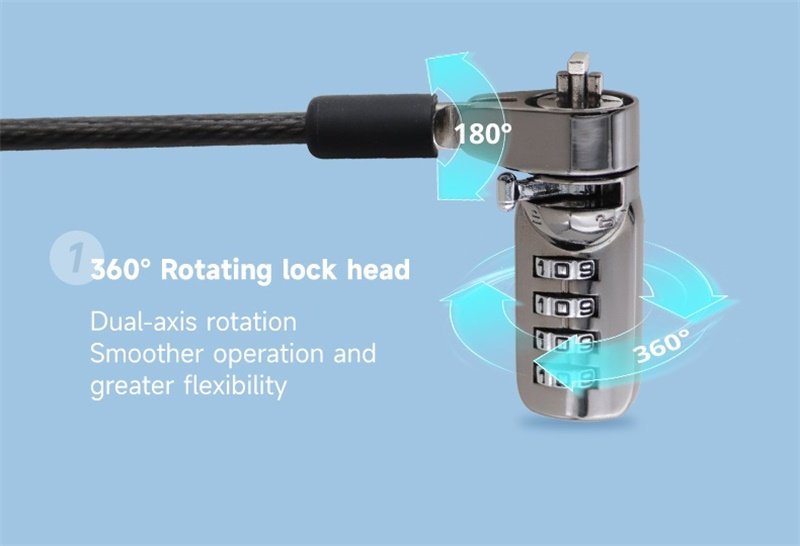
The lock head and cable head can rotate freely 360° and 180° respectively, allowing users to lock the lock flexibly.
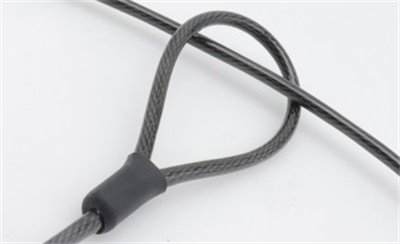
It is worth reminding that after locking, remember to scramble the password to ensure that the lock knob cannot be pushed.
まとめ, the MK815 laptop lock is easy to use and is an ideal security device for laptop users.